The Number on the Shirt: A Short History of Sporting Identification
Learn how shirt numbers developed from practical identification into a match-day custom, and how to read their history without mistaking them for fixed roles.
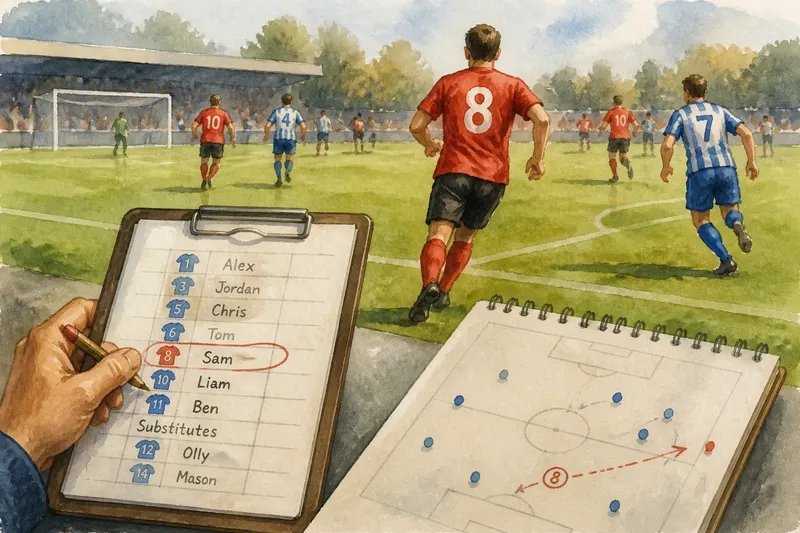
Shirt numbers gave football spectators a way to tell players apart from the stands, but their history did not begin with one universal rule. The number on a sporting shirt developed through separate changes in team sports, including documented experiments in Australian rules football and English association football.
What came before numbered shirts?
Teams first relied on distinctions that were already available: different colours, caps, sashes, badges or a player’s familiar position. These cues could work in a local game, but they were less helpful when shirts looked alike or an audience could not recognise individual players.
Team colours distinguish one side from another, not one player from a teammate. A position can help a knowledgeable observer, but players may move and not every spectator knows the formation. Shirt numbers offered a portable visual mark that stayed with the wearer.
When did shirt numbers appear in football?
One well-documented early use took place in Australian rules football. In 1911, players for the Sydney team wore numbered guernseys in a match against the Sydney University side. This is a concrete early milestone, not evidence that every sport or competition adopted numbers at once.
In association football, Arsenal and Sheffield Wednesday wore numbered shirts in a 1928 English league match. The Football League later made numbered shirts compulsory for its clubs in 1939. These events show a shift from a match-specific practice to a competition requirement in that setting; other sports and organisations followed their own paths.
Early numbering did not create a single international scheme. Rules about which numbers could be used, where they appeared and whether they were associated with positions varied between competitions and changed over time. The shared purpose was easier identification, while the details belonged to each sport and governing body.
How did a practical mark become part of sporting culture?
Once numbers appeared regularly on team kit, they became useful beyond the playing area. A spectator could identify a player in a programme or discussion, and a report could connect a visible shirt to a named person. The number also became part of the familiar look of a team’s strip.
Some sports and teams have linked particular numbers with positions or traditions. That association is not a universal code: a number may identify a player without explaining their duties, skills or tactical choices. Treat it like a label on a folder: useful for finding the right one, but not a description of everything inside.
How can you follow shirt numbers during a match?
Use a team sheet, if one is available, and compare it with what you can see on the pitch. Then follow a single shirt through a change in play. These checks help distinguish what the number actually tells you from what you might be tempted to infer.
- Check the team sheet: If a name is paired with a number, use both to connect the person to the shirt; if no sheet is available, rely on visible markings and avoid guessing the player’s name.
- Check whether the number is readable: If it is clear from where you are watching, use it to track the player; if it is hidden or indistinct, use a name, shirt colour or another visible cue instead.
- Check the player’s movement: If the player changes position, keep using the number to identify the same shirt; if you lose sight of it, wait for a clear view rather than assigning a role from the digits.
- Check a substitution: If the incoming player wears a different number, update your reference; if the numbers are unclear, consult the team sheet or official display before deciding who has entered.
- Check the match report or score sheet: If it pairs names and numbers, use the name for the person and the number to connect that person with the on-field shirt; if it lists only one, treat that record as incomplete for the other purpose.
- Check the sport’s competition rules: If they define number use or placement, follow that stated convention; if they do not, treat numbers as identification rather than assuming a position code.
Say you are watching an invented local football match and begin with a hypothetical team sheet that pairs midfielder Sam with number 8. You spot that shirt in the centre, then see it move towards the touchline; you continue following number 8 rather than deciding that the player has changed identity or must have a new position. When a substitute enters in a different numbered shirt, you check the team sheet and switch your reference to the new player. The result is a clear link between each visible shirt and the listed player, while the numbers alone leave the tactical reason for the movement unanswered.
What do people ask about the history of shirt numbers?
Did all sports adopt shirt numbers at the same time?
No. Australian rules football and association football have different documented milestones, and adoption depended on the sport and competition. A date from one league should not be treated as the starting point for every game.
Did the first numbers show fixed positions?
Not as a universal rule. Number-to-position conventions have existed in some settings, but the basic purpose of a shirt number is to distinguish a player, and local rules determine any additional meaning.
Why did competitions require numbers?
Numbers made it easier to distinguish players during organised matches and to refer to them in records or reports. A particular competition’s rule should be understood in its own context rather than assumed to apply everywhere.
Can a shirt number identify a player on its own?
It can help a spectator recognise a shirt, but a team sheet or roster is needed to connect that number with a name. If the number cannot be seen clearly, other identifying information must do the work.
What can the number not tell you?
A shirt number cannot establish why a player moved, who is leading the team or what tactical responsibility they have. Those details come from the match, the team’s arrangements and the rules of the sport—not from the digits alone.
The history of the number on a sporting shirt is therefore both specific and varied: particular matches and competition rules mark its development, but no single timeline covers every sport. When you watch, use the number to keep track of a player, then check a team sheet or the relevant competition rules before reading more into it.