A Rainy-Day Cricket Viewing Kit, Minus the Fussy Extras
A rainy-day cricket viewing kit keeps you comfortable and ready for interruptions, with practical choices for seating, rain protection and following the score.
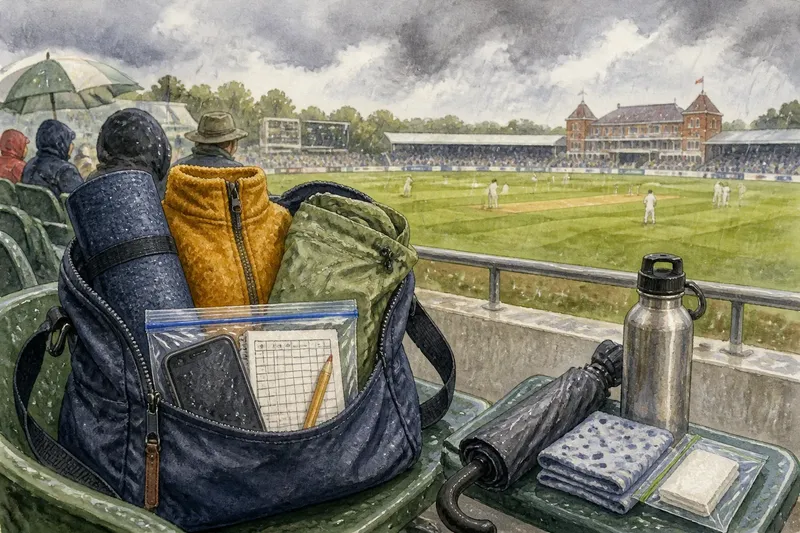
What should go in a rainy-day cricket viewing kit when the forecast keeps changing? Start with a seat that stays comfortable, a warm layer you can adjust and a simple way to follow play when showers interrupt. The aim is to make the day easier without turning your bag into a locker room.
Choose a seat that suits the ground
Begin with where you expect to sit. A plastic stadium seat, a grassy bank and a damp terrace call for different choices. If the ground has fixed seating, a thin, foldable seat pad can soften a hard surface and provide a barrier between you and a cold seat. On grass, a compact waterproof sitting mat may be more useful.
Look for something that folds or rolls without fuss and that you can carry alongside your usual bag. A bulky camping chair is rarely worth bringing if the venue has allocated seats or restricts large items. Check the ground’s bag and seating rules before setting off; some venues limit what visitors may bring into the stands.
Say you are heading to an open grass bank with a small day bag. You choose a lightweight sitting mat and leave the cushion that needs its own carrier at home. The expected result is a dry place to settle without carrying an extra bulky item.
Pack one warm layer you can adjust
Choose a layer that works over the clothes you are already wearing. A fleece or light jumper is easy to put on when a breeze cuts across the ground, then take off when the sun returns. A thin waterproof jacket can serve as an outer layer if showers are likely, but it should leave room to move and sit comfortably.
Think in terms of adjustment rather than piling on heavy clothing. A zipped layer is like a tap you can turn up or down: open it when you warm up, close it when the weather shifts. A hat can help on exposed stands, while gloves may be useful if your hands tend to get cold. Keep the items you are most likely to need within easy reach, not buried under snacks.
Pack a spare dry layer only if you have room and expect to be out for a long stretch. Otherwise, one versatile warm layer and a weather-resistant outer layer are a sensible starting point. Check the garment label and the forecast for the ground before you leave.
Keep rain protection easy to reach
A small umbrella can be convenient in an open area, but it may block the view of people behind you or be unsuitable in crowded stands. A hooded jacket keeps both hands free and is often easier to manage while watching. If you bring an umbrella, consider how you will store it once seated and whether the venue permits it.
Use a simple bag cover or a small waterproof pouch for items that should stay dry, such as a phone, paper scorecard or ticket. You do not need separate cases for everything. Group the few vulnerable items together so you can reach them quickly if rain begins, rather than rummaging through a damp bag.
For a wet seat, carry a small cloth or a few tissues in a resealable pouch. That is more useful than packing a large towel for an ordinary shower. If the weather turns severe, follow ground staff directions and move where instructed; comfort kit is no substitute for venue safety guidance.
Pick one way to follow the action
Cricket can pause for rain, move between overs and resume after a delay. A scorecard or the ground’s scoreboard gives you a straightforward way to keep track of the innings without watching a screen. If you enjoy noting the score, bring a pencil that will write on paper and a small card or notebook that fits in a pocket.
A phone can help you check the official match update when you are away from a clear view of the scoreboard. Save the relevant page or app before leaving, and make sure your phone is charged. Avoid trying to follow several feeds at once; constant switching can pull your attention away from the people and play around you.
Choose the method that fits how you watch. If you prefer to chat and look up when something happens, the ground scoreboard may be enough. If you like to follow each over, a basic scorecard gives you something to focus on during quieter spells. Neither requires extra equipment beyond what you will actually use.
Make the bag comfortable to carry
Use a small bag with a secure closure and a strap that sits comfortably over your shoulder. Keep the seat pad, spare layer and rain cover together, then leave space for your everyday essentials. A bag that is easy to open while seated is more practical than one with many pockets you have to search.
Before you go, take out anything that does not serve the outing. Multiple blankets, spare footwear and elaborate picnic gear can add weight and make it harder to find the items you packed for rain. A water bottle and a modest snack may be welcome, but check the venue’s rules on food and drink rather than assuming you can bring them in.
What should you bring for a rainy-day cricket match?
Is a waterproof jacket better than an umbrella?
A jacket keeps your hands free and is usually easier to manage in a crowded stand. An umbrella may suit an open space, but check whether it could obstruct another spectator or fall foul of venue rules.
Do you need a special cricket seat?
No. A compact seat pad or waterproof mat can be enough, depending on whether you have a fixed seat or expect to sit on grass. Choose something you can carry comfortably and that fits the ground’s rules.
How can you follow the score during a rain delay?
Use the ground scoreboard, a paper scorecard or one reliable match update on your phone. Pick the option you will actually check, and keep your device dry if you bring it.
What should go in the bag first?
Put the items most likely to be needed quickly near the top: your warm layer, rain protection and any dry pouch. Keep the seat pad accessible too, so you can settle without emptying the whole bag.
What should you check before leaving?
- Check where you will sit. If you have a hard fixed seat, pack a thin seat pad; if you expect to sit on grass, take a waterproof mat instead.
- Check the forecast for the ground. If showers or a breeze are likely, put an adjustable warm layer and hooded rain protection near the top; if conditions look settled, leave bulky spare clothing at home.
- Check how you will follow play. If you prefer to track each over, take a scorecard and pencil; if you only need occasional updates, use the ground scoreboard or prepare one match update on your phone.
- Check which items must stay dry. If you are bringing a phone, ticket or paper scorecard, group them in a resealable waterproof pouch; if you have no vulnerable items, skip the extra pouch.
- Check the venue’s rules on bags and umbrellas. If your chosen bag or umbrella is not allowed, leave it behind and use permitted rain protection; if the rules allow it, pack it where it will not obstruct other spectators.
- Check the food and drink guidance. If the venue allows your water bottle and snack, pack them; if not, leave them out and plan to use the available facilities.
- Check whether you can carry the packed bag comfortably. If it feels awkward or hard to open, remove extras and reposition the seat pad, layer and rain cover for easy access; if it carries comfortably, keep the arrangement as it is.
A useful rainy-day cricket viewing kit is less about predicting every shower than making the basics easy to reach. Take a comfortable seat, one adaptable warm layer and one clear way to follow the action. Before you leave, confirm the venue rules and put the rain cover and dry pouch where you can reach them quickly; then you will not need to unpack the whole bag when the weather changes.