Grass, Clay or Hard Court: What the Surface Asks of a Player
Grass, clay or hard court changes tennis ball bounce, movement and shot timing. Learn what each surface asks of players and how that shapes play.
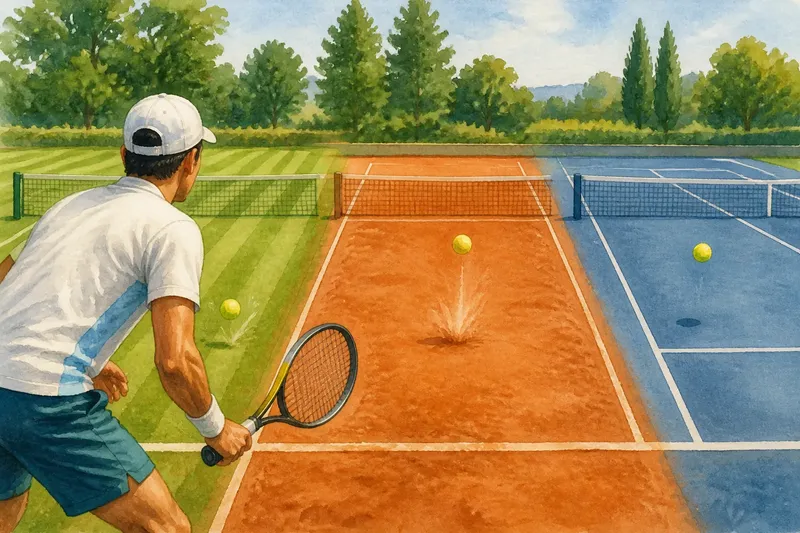
A tennis ball lands near the baseline, skids low and reaches the player sooner than expected. On another court, the same shot rises higher and leaves more time to adjust. Grass, clay or hard court changes the feel of tennis before a player chooses a stroke; the surface shapes the exchange itself.
That difference is not simply a matter of one court being fast and another slow. Ball bounce, footing, movement and the time available to prepare all interact. Once you notice those interactions, surface becomes part of tennis’s character rather than a backdrop for it.
What does a court surface change?
A surface affects what happens between the ball’s landing and the next contact. The ball’s speed and height after bouncing matter, but so does how reliably it bounces and how easily a player can move into position. A low, quick bounce can reward early preparation. A higher bounce may give a player time to set up a full swing, while also pushing the contact point farther from a comfortable hitting height.
Players respond to this chain, not to a surface label alone. They adjust where they stand, how soon they prepare, which shots they select and how they recover after striking. A court can therefore influence both the visible rhythm of a rally and the decisions that produce it.
Surface is one influence among several. Ball type and condition, weather, court upkeep and the players’ styles also affect how a match feels. The useful question is not simply, “Which surface is fastest?” but “What kind of bounce and movement does this court make likely?”
Why does grass make timing feel urgent?
Grass courts commonly produce a relatively low, quick bounce. The ball can stay close to the ground, so a player may have less time to move into position after it lands. A clean, well-struck shot can arrive with particular urgency, and a serve can be difficult to return when the bounce stays low.
That shorter window puts a premium on reading the ball early. Players often look to take it on the rise, move forward when an opening appears and finish points at the net. A low slice can be awkward because it asks the opponent to get down quickly, while a high, defensive ball may give the other player time to attack.
Footing has its own character. Grass can feel slick, especially when damp or worn, and players may use controlled slides or shorter adjustment steps rather than planting abruptly. The surface rewards decisive movement, but rushing can make it harder to stay balanced for the next stroke.
Grass is not one uniform condition. Fresh, firm turf and a worn area near the baseline can behave differently, even within the same court. The practical point is to expect the bounce to reflect the patch of ground the ball meets, not just the word “grass” on the venue description.
How does clay extend a rally?
Clay often slows the ball after it lands and gives it a higher bounce than grass. Players may have more time to reach a shot, but that does not make the exchange effortless. A high ball can push them back, and a heavy topspin shot can keep rising after the bounce, making a comfortable strike difficult.
The extra time can support longer rallies. Players build points by moving an opponent side to side, changing height and spin, then taking an opening when it appears. Patience matters because a ball that seems safe at first can become uncomfortable through repeated depth and angle.
Movement on clay also differs. Players often slide into a shot, letting their momentum carry them towards the ball before they recover towards a useful position. The slide is not just a flourish: it is part of how a player covers space and controls balance. On unfamiliar clay, a player may initially brake too sharply or slide farther than intended.
Clay courts can vary with moisture, maintenance and the amount of loose material at the surface. Those conditions affect grip and the way the ball comes through. A player who expects a familiar bounce may need to revise that expectation after noticing that the court is damp, dusty or unevenly maintained.
What makes a hard court feel different?
Hard courts have a firm base and a more consistent playing surface than turf or loose clay, but “hard court” still describes a family of courts, not a single identical feel. The court’s finish and construction influence how the ball responds. In broad terms, players can expect a more regular bounce, while the pace and height vary between courts.
A consistent bounce makes it easier to read where the ball will arrive, but it does not remove the need for adjustment. A quick hard court can reward early contact and direct attacking shots. A slower one can allow more time to defend and build a rally. The same player may therefore experience hard courts differently from one venue to another.
Movement tends to involve firm changes of direction rather than the sliding style associated with clay. Players need to manage their braking and recovery because the surface offers a different feel underfoot. That distinction affects how a player reaches a wide ball and how quickly they can prepare for the next one.
Hard courts can also feel demanding on the body because the ground is firm. That is a general consideration, not a reason to assume every player will react alike. If discomfort persists or movement feels unsafe, a player should stop and seek appropriate advice rather than trying to push through it.
How should a player adapt to a new court?
Start by observing rather than guessing. During a warm-up, notice how high the ball rises, how quickly it reaches you and whether it bounces consistently. Pay attention to your footing as well: can you stop and change direction comfortably, or does the court feel slippery, loose or unusually firm?
Then make small tactical adjustments. On a low, quick bounce, prepare earlier and keep your contact point in mind. On a higher, slower bounce, use the extra time to shape the point rather than swinging harder by default. If the surface allows controlled sliding, practise moving and recovering at a comfortable pace before relying on it during a demanding rally.
Think of surface like the sole of a shoe: it changes how movement meets the ground, but it does not decide every move. The player still chooses how to respond. An imagined newcomer switching from a dry hard court to damp clay might notice that the ball rises more slowly while their feet slide farther than expected. If they shorten their first steps, allow extra time to recover and aim with more margin over the net, the observable result should be steadier contact and fewer rushed swings—not an instant change in skill.
- Watch several warm-up bounces and note their height.
- Notice whether the ball loses speed, skids or changes direction after landing.
- Check how your shoes grip during gentle starts and stops.
- Prepare earlier if the ball is reaching you quickly.
- Give yourself more recovery time if movement involves sliding.
- Choose a safer margin when the bounce is unfamiliar.
For court access, footwear and surface-care questions, follow the venue’s posted guidance and the shoe or court manufacturer’s instructions. A facility may restrict particular shoes or movement practices to protect the playing surface and its users.
Which surface questions help explain the difference?
Is grass always faster than clay?
Grass often produces a lower, quicker bounce, while clay commonly slows the ball and lifts it higher. Court condition, weather, ball choice and playing style can alter the experience, so the surface name alone cannot predict every rally.
Why does a high bounce change shot selection?
A high ball can force a player to contact it above a comfortable hitting point or move behind it. Players may respond by stepping in early, using more spin or returning the ball with height and depth to regain position.
Does a consistent bounce make hard court easier?
Consistency can help a player anticipate the ball, but speed, footing and the player’s own movement still matter. A dependable bounce may make timing more predictable without making a demanding shot easy.
Can the same court play differently on another day?
Yes. Moisture, wear, dust, temperature and upkeep can affect bounce and grip, particularly on grass and clay. Notice the conditions during the warm-up instead of assuming that a familiar venue will feel identical each time.
Why is surface part of tennis’s character?
Each surface changes the questions a player must answer. Grass asks whether they can read and meet a low ball in time. Clay asks whether they can manage height, spin and a longer exchange. Hard court asks them to use a more predictable bounce while handling a firm, varied pace and footing.
Those demands influence how points are constructed, but they do not prescribe one winning style. A player can attack on clay, defend on grass or build patiently on hard court. The surface simply changes the costs and opportunities attached to each choice.
When watching a match, follow the ball after it lands and watch the player’s first movement. You will often see the court’s influence before the stroke is struck: a rushed step, a retreat from a rising bounce or a slide into contact. That small moment explains why grass, clay or hard court is not just a setting. It is an active part of the game’s conversation.